Do you need an administrative assistant?
Maybe not for all of it. Here's what an admin does all day, what one really costs in Canada, and which tasks software can take before you post the job.

If you're asking whether you need an admin assistant, you're probably doing the admin yourself, in the evenings. This guide breaks the job into tasks, prices a hire in Canada, with Vancouver and Winnipeg as examples, and sorts which tasks software can take and which still need a person.
- 48%
- of Canadian business owners surveyed by BDC said hiring more staff would give them more flexibility, in November 2024
- 40%
- say automating routine tasks would, in the same BDC survey
- 49.7 hours
- a week is what those owners work on average, per BDC
What does an administrative assistant do all day?

We couldn't find a credible study of how admin assistants split their hours, so we won't guess at percentages. Here's the job by task instead. The list follows WorkBC's duties for administrative assistants (NOC 13110), sorted the way it tends to show up in a small business.
- Phones. Answering calls, taking messages, routing them to the right person and greeting anyone who walks in.
- Inbox. Reading mail and email, answering the routine questions and passing on the rest.
- Scheduling. Booking appointments and meetings, confirming them and moving them when plans change.
- Invoicing and chasing payments. Sending invoices, sending reminders and calling the customers who still haven't paid.
- Data entry. Copying details from forms, emails, receipts and job sheets into the systems you use.
- Filing. Keeping paper and electronic files named and findable.
- Ordering supplies. Noticing when something is running low and reordering it.
- Judgment work. Calming an upset customer, handling the request that doesn't fit the rules, training new staff and keeping the office running.
Most of that list repeats. The same call, the same reminder, the same form typed into the same system. The last item doesn't. It's also the part owners describe when they talk about a great admin.
How much does an administrative assistant make in Canada?
Job Bank publishes wages for every occupation by region. The low end is, in most cases, the 10th percentile and the high end the 90th. Here are the hourly figures for two cities we work in and for Canada as a whole. The Vancouver figures are for the Lower Mainland and Southwest region.
- Vancouver. Administrative assistant (NOC 13110) median $28.85, from $20.00 to $36.06. Receptionist (NOC 14101) median $24.00, from $18.25 to $30.00. Office administrator (NOC 13100) median $29.00, from $21.98 to $48.07.
- Winnipeg. Administrative assistant median $25.00, from $18.00 to $36.92. Receptionist median $18.75, from $16.40 to $25.60.
- Canada. Administrative assistant median $26.44, from $19.23 to $36.88. Receptionist median $21.00, from $16.25 to $29.00. Office administrator median $29.00, from $21.00 to $44.15.
BC as a whole is close to Vancouver, with a median of $28.50 an hour for an administrative assistant. Job Bank updated all of these in November 2025 from 2023 to 2024 data, so 2026 pay may run a little higher. So how much should an administrative assistant make? Across Canada, the middle of the market is about $26 an hour, or roughly $55,000 a year full-time. In Vancouver it's just under $29 an hour, about $60,000 a year.
What an admin really costs an employer: a BC example
The wage isn't the whole cost. Everywhere outside Quebec, which runs its own pension plan, employers pay CPP and EI on top. Then come your province's workers' comp premiums and its rules for vacation, stat holidays and sick days. We'll use BC as the worked example. Other provinces differ, so check your own before you budget.
- CPP, everywhere outside Quebec. The employer matches 5.95% of earnings between $3,500 and $74,600 in 2026, per the CRA.
- EI, everywhere outside Quebec. The employee rate is 1.63% of insurable earnings up to $68,900 in 2026, and the employer pays 1.4 times that, about 2.28%.
- Vacation pay, BC. At least 4% of wages, rising to 6% after 5 years. After 12 months the employee gets 2 weeks off.
- Stat holidays, BC. There are 11 in 2026, each paid at an average day's pay whether or not the person works.
- Sick days, BC. After 90 days, employees get up to 5 paid sick days a year.
- Workers' comp, BC. WorkSafeBC's 2026 average base rate is $1.55 per $100 of payroll. Your actual rate depends on your industry.
- Employer health tax, BC. None if your BC payroll is $1 million or less, which covers most small businesses.
Here's our math for a BC employer at the Vancouver median of $28.85 an hour. A full-time year is 2,080 paid hours, or $60,008, and that already includes the vacation and stat days you pay for. Add CPP of about $3,362, EI of about $1,369 and WorkSafeBC of about $930 at the average rate. That's about $65,700. Take out 2 weeks of vacation, 11 stats and 5 sick days, and you get around 1,872 hours of actual work.
- About $65,700
- a year for a full-time admin assistant at the Vancouver median, wages plus CPP, EI and WorkSafeBC, by our math from the rates above
- About $35
- for each hour they actually work, once vacation, stats and sick days come out
- $45,500 to $82,000
- a year from the low end to the high end of the Vancouver Job Bank range, by the same math
That still leaves out benefits, which 92.7% of BC workers in this occupation get in some form. It also leaves out the job ad, the weeks of training, a desk, a computer, software seats and your time managing them.
Can AI replace an administrative assistant?
Part of the job, yes. Software is good at work that repeats and follows rules. It's weak at judgment, relationships and messy exceptions. Statistics Canada lists data entry clerks among jobs that are highly exposed to AI and get little help from it. It also cautions that high exposure doesn't necessarily mean job loss. Here's how the tasks above sort out.

Automation handles these well on its own:
- Answering routine calls about hours, prices and availability, and booking the job.
- Texting back anyone who calls and hangs up.
- Sorting the inbox and answering the questions you get every week.
- Booking, confirming and reminding appointments.
- Sending invoices and the first payment reminders on schedule.
- Copying details from forms, emails and receipts into your systems.
- Naming and filing documents where they belong.
Automation drafts these, and a person checks before anything goes out:
- Quotes and estimates drafted from notes, photos and your price list.
- Overdue accounts past the first reminders, where the tone matters with a good customer.
- Supply orders. Software can spot low stock and draft the order, and a person approves it.
- Bookkeeping categories, which your bookkeeper or accountant still reviews.
- Replies to anything unusual that came through the inbox.
These need a person:
- An upset customer, a complaint or a mistake that needs an apology.
- Exceptions. A refund outside your policy, a rush job or a customer you treat differently for good reasons.
- Walk-ins, deliveries and the physical office.
- Training new staff and keeping the office pleasant to work in.
- Decisions with money or legal weight, like contracts and hiring.
Virtual assistant vs AI vs hiring: the three options
Once you know which tasks repeat, there are three ways to cover the work.
- Hire full-time. About $65,700 a year at the Vancouver median in our BC example, and less where wages are lower, like Winnipeg. You get a person on site for walk-ins, judgment calls and everything in between. You also pay for the quiet hours.
- Hire a virtual assistant. On Upwork, virtual assistants' median rates run US$10 to US$20 an hour, and experienced ones average US$18 to US$35. At 20 hours a week that's roughly US$10,400 to US$36,400 a year. It's flexible, but they're remote, often in another time zone, and still doing the repeating work by hand. If you set their hours and supply their tools, the CRA may treat them as an employee, not a contractor.
- Automate the repeating work and keep a person for judgment. Software takes the calls, inbox, scheduling, invoices and data entry. A person, maybe part-time, handles the rest. You pay a setup cost and a monthly fee, which vary by provider, plus the person. A part-timer at 20 hours a week at the Vancouver median costs about $32,700 a year by our BC math.
Virtual assistant vs AI comes down to what the work is. A virtual assistant is a person, so they can handle some judgment calls, but they work the hours you pay for. Software does the same repeating step every time, at any hour, and stops where the rules stop. Many businesses end up with both.
When should you hire an assistant anyway?
Sometimes the answer is a person, and that's fine. These are real signals that you need one.
- Customers expect a person in the room. A clinic front desk, a showroom or a busy counter needs someone there.
- Most of your admin is exceptions. If no two days look alike, software has little to take.
- You need someone to manage people and vendors, like onboarding staff, dealing with the landlord or keeping suppliers in line.
- Your best clients expect the same voice every time they call.
- You've already handed off the repeating work and the judgment work still fills more than a part-time week.
- Your team keeps waiting on you for answers that need someone who knows the business. Writing the process down helps, but sometimes it's a sign you need a second person in charge.
Even then, take the repeating tasks off the new hire's plate first. You'll hire for fewer hours, or get more from the hours you pay for.
Our take: you may not need an admin for that part
If most of what you'd hire an admin for repeats, you don't need an administrator for that part. You can automate it and keep the money. That's what we do at Syncafy. We build your business its own software for the repeating work, like answering calls, inbox and quote follow-ups, invoices, data entry and scheduling. You own the software and the data, which is why we think it matters.
- Roadmap: $750, which comes off your build if you go ahead.
- Build: a fixed quote from $4K to $8K CAD.
- Run: $750 to $1.5K a month for hosting, monitoring, fixes and upgrades.
That's $13,000 to $26,000 in the first year, against about $65,700 for a full-time admin at the Vancouver median in our BC example. If you still need a part-timer for the judgment work, add theirs. To see what a hire costs your business at your own wage and hours, use our employee cost calculator. Our pricing page has the details.
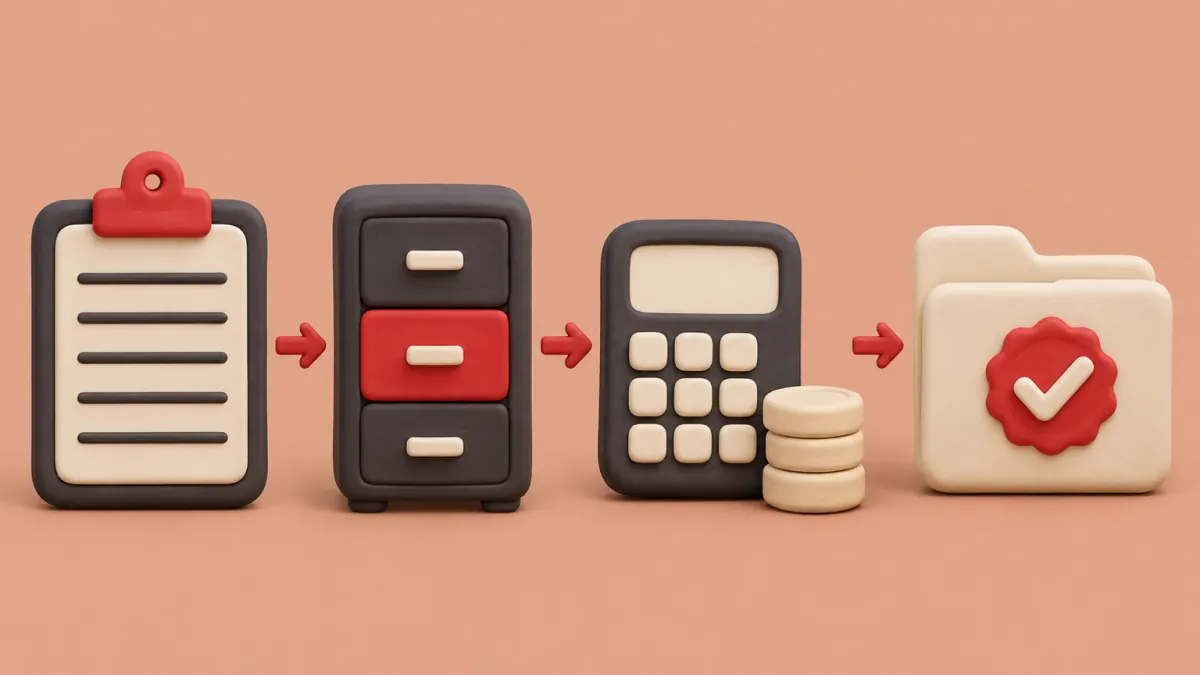
- Log a week of tasks
- Circle what repeats
- Price each option
- Pick your mix
Want to see this mapped to your business?
Start small

For one week, write down every admin task as you do it. Note what it was, how long it took and whether you've done the exact same thing before. At the end of the week, circle the tasks that repeat. Those are the ones software can take. What's left tells you whether you need a person, and for how many hours.
Questions people ask
How much does an administrative assistant make in Canada?
Job Bank puts the Canada-wide median at $26.44 an hour, or roughly $55,000 a year full-time. It's higher in Vancouver, at $28.85, and lower in Winnipeg, at $25.00. The employer also pays CPP, EI and workers' comp on top of the wage.
Can AI replace an administrative assistant?
It can take over the parts of the job that repeat, like routine calls, booking, invoice reminders and data entry. It's weak at judgment, relationships and messy exceptions, such as an upset customer or a request that doesn't fit your rules. Most small businesses still need a person for that part, often part-time.
When should a small business hire an assistant?
Hire when customers expect a person in the room, when most of your admin is exceptions rather than repeats, or when you need someone to manage staff and vendors. A good test is to log a week of admin tasks and see what's left after the repeating work. If that still fills more than a part-time week, it's time to hire.
Is a virtual assistant cheaper than an employee?
Usually, per hour. Freelance virtual assistants on Upwork have median rates of about US$10 to US$20 an hour, while a full-time employee in Canada costs the wage plus CPP, EI, vacation and stat pay. A virtual assistant still does the repeating work by hand, and if you set their hours and tools the CRA may treat them as an employee.
Thinking about hiring an admin?
Bring a list of the admin tasks that ate last week to a free 30-minute call. We'll sort out which ones software can take and what's left for a person.